
Wednesday, 7 March 2012

The Shawshank Redemption - Key Text Notes

(Frank Darabont 1994)
Film Information
Directed by: Frank Darabont
CAST
Andy Dufresne: Tim Robbins
Ellis Boyd "Red" Redding: Morgan Freeman
Warden Norton: Bob Gunton
Captain Hadley: Clancy Brown
Heywood: William Sadler
Tommy: Gil Bellows
Brooks: James Whitmore
Boggs: Mark Rolston
SYNOPSIS
After the murder of his wife, hotshot banker Andrew Dufresne is sent to Shawshank Prison, where the usual unpleasantness occurs. Over the years, he retains hope and eventually gains the respect of his fellow inmates, especially longtime convict "Red" Redding, a black marketeer, and becomes influential within the prison
Preferred Reading
The emotions the film aims to provoke in the spectator are very closely linked to the themes which drive the narrative: Hope, injustice, friendship, fear, imprisonment and freedom, retribution.
Of all the emotions the spectator is manipulated to experience within the film as a whole the most prominent are:
Triumph - When Andy wins small victories such as on the rooftop or when he plays the music, the spectator is positioned to feel a sense of triumph. When he finally escapes, that sense of triumph is magnified enormously.
Despair - There is much sadness within the film; Brooks' lonely death, Andy's wrongful imprisonment, the loss of hope in Red.

Pity - The spectator is manipulated to feel great sympathy and pity for the characters. The prisoners go through terrible experiences and have many of their human rights and dignities stripped from them. Due to immersion, identification and representation we feel sorry for them.
Joy - The joy of Red and Andy's reunion as free men is the arguably one of the most affecting moments in the film. It is certainly the most joyful. There are other moments of joy too - the music scene and the rooftop scene as well as Andy's escape.
Injustice - Huge injustices take place in the film and the protagonists are almost constantly being abused, exploited or brutalised. The serial sexual attacks on Andy, the prison guards' brutality, the violence, the murder of Tommy, the rejection of parole.
Macro-features - Narrative and Genre
The film belongs to the prison drama genre and its narrative is in line with its genre. It tells the story of a wrongfully imprisoned man who undergoes a huge amount of brutal abuse, injustice and hardship yet manages to retain his sense of hope and ultimately escape to freedom and bring his corrupt captors to justice.
This narrative is inherently emotionally provocative as it taps into some very basic emotions and instinctive feelings - freedom, injustice, revenge.

The fact that it has a 'happy ending' is also relevant, especially when looked at in terms of its overall narrative structure. The vast majority of the film is about the abuses and degradation Andy and his friends suffer as inmate os Shawshank Prison. Although they win a few petty victories - the library, the beers on the roof etc, their life is one of misery and degradation which mounts and mounts. This constant increasing of despair and hopelessness manipulates the spectator to feel enormous elation when the put upon hero is finally liberated and vindicated.
Representation
The representations of the characters and places within the film are an important part of how this film works to position the spectator to feel emotion.
The warden and guards are consistently represented as being corrupt, sadistic and completely unlikable. This is exemplified in Warden Norton and Captain Hadley. Norton is hypocritical, power-hungry, greedy, corrupt, selfish and ultimately murderous. Hadley is similarly corrupt but is also violent, sadistic, hateful and foul-mouthed. He wields his power even over the other guards. The way they look, act, speak and are spoken to all reflect this very clearly. They both dress meticulously and claim to have higher morals than others but are in fact criminals themselves. Norton and Hadley are very clearly the 'villains' of the film. There are a few more sympathetic guards seen but these are generally very sidelined and usually completely dominated by either Hadley or Norton.

The prison itself is represented as an incredibly bleak, grey and oppressive place. Its thick stone walls are present in nearly every scene and gates and bars can be seen in every direction. The lighting is often dark and oppressive inside and grey and bleak on the outside.
Spectator Alignment (Identification)
The spectator is constantly encouraged to sympathise and identify with Andy and Red. A large part of how this is done is through voice over. The voice over is a technique which means that characters speak directly to the spectator thus putting them in the speaker's viewpoint much more firmly. Everything we see in the film is through Red's eyes. He tells us how to feel and how to think about many of the key moments in the film.
Close Analysis - Key Scene 1 - The Mozart Scene
Scene Summary: The prison receives a large delivery of books and records due to Andy's persistent letter-writing. Andy takes advantage of the opportunity when he is briefly left alone by one of the softer prison guards and locks himself in the warden's office. He uses the tannoy system to broadcast a piece of classical music by Mozart to the entire prison. Although he is punished severely for his actions all the inmates felt free for a fleeting moment of beauty.
Preferred reading: The emotions of awed beauty, joy, happiness and triumph when Andy plays the music as well as fear of the reprisal he will face as a result.
Techniques Used to Provoke Emotion
Narrative structure: The scene immediately before this one is one of the saddest moments in the film - Brooks' death. We hear Brooks voice as he reads a letter he has written to Andy and Red accompanied by images of his life outside the prison and subsequent death by his own hand. It is a pitiful, lonely and heart-breaking scene which leaves the spectator feeling very sad and 'down'. This scene of rebellion and triumph gives the spectator an emotional tone shift and moment of relief. The satisfaction and elation felt in this scene is keener due to the despair felt in the previous scene.
Cinematography/ Imagery: Slow camera movements are used to great effect here as the prisoners stop what they are doing and look up at the speaker in awed silence and reverence. The slow panning out of the camera as it looks down on the prison yard is especially effective as it shows the scale of the stunt and how even the wardens are shocked into silence and inactivity as a result of it.
Sound: The sound of the music itself gets louder throughout the scene and takes the place of nearly all over sound. This encourages us to feel what the prisoners feel as they listen to the moving and beautiful music. A voice over is again employed to anchor the meaning and add to it.
 Performance: Morgan Freeman's rich and sonorous tones add a huge amount of gravitas and feeling to the voice over dialogue.
Voice Over: As with much of the film, this sequence use a voice over which aligns the spectator with Red's point of view.
Dialogue: "I have no idea to this day what those two Italian ladies were singing about. Truth is, I don't wanna know. Some things are best left unsaid. I'd like to think they were singing about something so beautiful it can't be expressed in words, and it makes your heart ache because of it. I tell you those voices soared, higher and farther than anybody in a grey place dares to dream. It was like some beautiful bird flapped into our drab little cage and made these walls dissolve away, and for the briefest of moments, every last man in Shawshank felt free."
Oppositional Reading: Morgan Freeman's voice has become very distinctive since (and partly because of) this film. Voice overs using his voice are particularly well known and it is almost a cliche for when a film wants to impart dramatic or emotional content. This could cause a spectator to view the scene as overly-manipulative or too 'schmaltzy' or 'cheesy'.
Close Analysis - Key Scene 2
Scene Summary: Andy returns to his cell after performing his usual routine having been released from solitary confinement after the incident with Tommy. Red (and the audience) are very worried that Andy will kill himself in his cell that night. In the morning, Andy has disappeared and it is revealed to the audience that he escaped in the night.
Preferred reading: The intention of the scene is to make the spectator feel tension and anxiety which then turns to confusion and intrigue and finally turning to outright triumph, joy and satisfaction as the scene builds to its conclusion.
Techniques Used to Provoke Emotion
Narrative structure: In the overall narrative of the film this scene occurs almost at the end. Much of the film has shown the abuses and degradations suffered by Andy and the other prisoners with an escalating sense of severity and injustice. This triumphant scene is made all the more satisfying as a result of this. The scene itself is structured so that we worry that Andy has committed suicide as a result of all the terrible things that have happened to him. Our sense of relief that this 'worst case scenario' has not happened increases our joy when we see that he has actually escaped.
Cinematography/ Imagery: The tight, cramped shots of Andy in the sewer pipe covered in filth and excrement give a very apt visual metaphor for the abuses he has suffered and the journey he has ben forced to take. The final shot of the scene of Andy, finally free - shirtless, washed clean by the rain in the dramatic lighting of the thunder storm is a powerful image and as the camera rises into an aerial shot and Andy looks up at the sky with his arms spread in an almost Christ-like pose the power is heightened.
 Sound: The music effectively guides the spectator's emotions as it swells in an orchestral and moving piece of music. Earlier in the scene, sound is used very effectively to give the impression of mystery as the warden throws a stone at the poster. The stone rips through the poster and 'plinks' into the darkness beyond. This is our first understanding of what has happened.
Performance: The scene is anchored by Tim Robbins' immersive performance of Andy Dufresne. Morgan freeman's voice performance is also a powerful emotive factor.
Voice Over: Another Morgan Freeman voice over - again it encourages the spectator to identify or align themselves with the character and the 'side' they are on.
Year 12 Media - Case study: Slumdog Millionaire

How is India represented in Slumdog Millionaire?
1. Division between wealth and poverty - seen in the train sequence.
2. Religious conflict - seen when Jamal's mother is killed in the Hindu attack.
3. Corruption in police force - seen when Jamal is tortured and when police don't help in the Hindu attack.
4. Brutality and abuse of children - seen in the scene where the child is blinded. Linked to extreme poverty.
5. Strong community and culture - seen in scenes of crowds cheering for Jamal, the Bollywood dancing at the ending and the overall picture of India.
6. Rich heritage - Taj Mahal sequence.
Sample Question
Using your own detailed examples, explore the representation of national identity in media texts.
Essay structure:
Introduce the concept.
Refer to 2-3 detailed examples; ensure you include technical analysis.
Conclude by summing up your points.
Tuesday, 6 March 2012
Year 12 Film Studies - Section C: US Film Comparison

"Section C: US Cinema Comparative Study (40 marks)
One question from a choice of two.
Candidates are required to compare and contrast two films either from the same genre or dealing with a specific theme.
Both questions will have an emphasis on the relationship between aspects of the films' narrative in relation to generic characteristics.
The first question will be based primarily on narrative study.
The second will be based on contextual study.
Issues of representation will be common to both questions.
The films to be studied for this unit are:
The War of the Worlds (Byron Haskin 1953)
and
The War of the Worlds (Steven Spielberg 2005)
Both films are adaptations of the novel by H.G Welles.
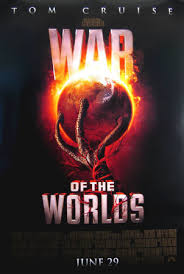
You must look at the following areas in relation to both of your focus films. You will be looking for elements which are similar and different in these areas.
Representation
Social context
Messages and Values
Themes and Ideas
Narrative/Genre
CLOSE ANALYSIS - The War of the Worlds (Byron Haskin

To develop a critical understanding of the text.
To analyse the messages and values in the film.
To examine representation in the film.
To explore how significant setting and place is to the film’s themes.
To gain an understanding of the social context of the film.
Characters
 Representation
In order to analyse a representation you must ask yourself the following:
How does all of this affect the film's themes and messages and values? Does the film uphold these ideas or challenge them?
AIMS
To develop a critical understanding of the text.
To analyse the messages and values in the film.
To examine representation in the film.
To explore how significant setting and place is to the film’s themes.
To gain an understanding of the social context of the film.
 Messages and Values
Messages and values can often be identified most clearly in the endings of films. Put simply, messages and values are what the film is saying is 'good' or 'right'. What things (ideas, concepts, morals) are being celebrated and what are being denigrated?
Themes
Messages and Values
Key Scene 1 - The Ending

How do the characters look? Costume? Make up? Facial expression?
How do they sound? Voice? Aural motifs/ soundtrack? Diegetic sound design.
How do other people treat them?
Narrative – what happens to them? What do they do? What is their function in the narrative?
Setting and Place
Social Context
How does all of this affect the film's themes and messages and values? Does the film uphold these ideas or challenge them?
CLOSE ANALYSIS - The War of the Worlds (Steven Spielberg 2005)


To develop a critical understanding of the text.
To analyse the messages and values in the film.
To examine representation in the film.
To explore how significant setting and place is to the film’s themes.
To gain an understanding of the social context of the film.
Characters
Themes
Messages and values can often be identified most clearly in the endings of films. Put simply, messages and values are what the film is saying is 'good' or 'right'. What things (ideas, concepts, morals) are being celebrated and what are being denigrated?
Key Scene 1 - The Ending
Representation
Setting and Place
Social Context
Key Scene 2 -
COMPARISONS BETWEEN THE TEXTS
The exam question will ask you to critically compare the two American films you have studied for this topic - The War of the Worlds.
The areas you must be able to discuss with thorough detail are:

Themes and Issues
Messages and Values
Representation of Gender/Age
Significance of Setting and Place
Wider Social Context
Narrative/Genre
ADVICE FROM THE EXAM BOARD
PAST QUESTIONS
With particular reference to the endings of your chosen American films, compare their messages and values.
How useful have your wider contextual studies been in understanding similarities and differences in the American films you have studied for this topic?
What is significant about setting and/or place in your chosen American films?
In the American films you have studied for this topic, how far do the representations of either women or men reflect the time when they were made?
Tuesday, 28 February 2012
Year 12 Film Studies - Exam Advice

In order to achieve the best possible results in your exam you must obviously know your subject, revise and ensure you have a thorough understanding of all possible topics.
This is not all however - you can make a huge difference to your overall grade by learning and using good exam technique, knowing the common pitfalls that students fall into and avoiding them.
Common Mistakes (All exam sections)
 Below is a list of common mistakes that students make or areas where they fall down. Use it as a check list to ensure that you don't make the same mistakes.
Not enough reference to examples.
Not including (or mis-spelling) title, director, year.
Time organisation.
Not using specific terminology.
Presentation (illegible writing).
Not keeping focus on the question.
Not having wide or deep enough knowledge to draw from.
Not going into enough detail.
Not bringing in your own case study knowledge.
Not choosing/answering the right question.
Not structuring the response.
No close analysis used.
Not enough debate in the response.
Unsophisticated use of stimulus material.
SECTION A (Audiences and Producers) -
STEP BY STEP EXAM PLAN
1. Read both questions carefully
2. Evaluate how much you know about each question
3. Decide which question you want to answer
4. Which point of view do you take on the question?
5. Read the resource pack
6. Annotate resource pack with brief notes or thoughts
7. Weigh up 2 sides of the argument mentally
8. Make very brief notes on structure using bullet points.
9. Begin essay with an introduction in which you answer the question in brief.
10. Argument 1 - try to make 3 points and back them up with evidence from your learning or from the resource pack.
11. Argument 2 - try to make 3 points and back them up with evidence from your learning or from the resource pack.
12. Conclude with the question and answer it finally.
SECTION B (British Film and Genre) -
STEP BY STEP EXAM PLAN
1. Read both questions carefully
2. Evaluate how much you know about each question
3. Decide which question you want to answer
4. Write a list of conventions/characteristics/points to include very briefly.
5. Create very brief plan/structure.
6. Begin essay with introduction in which you refer to the question.
7. Film 1
8. Film 2
9. Film 3
10. Conclude with reference to the question again.
Thursday, 23 February 2012
Year 12 Media Studies - Exam Topic
EXAM FORMAT
 Exam Requirements:
SUMMARIES
KEY ISSUES - TEXTUAL ANALYSIS

A textual analysis is the process by which a media text is examined and deconstructed in order to determine what message and values it contains.
Still Image Analysis
When analysing a still image (such as an advert or movie poster) you will need to use denotation and connotation to deconstruct the media text.
Denotation
- What is shown only. The image with no meaning attached eg a young woman smiling in a white lacy dress.
Connotation
- What associations and meanings the images have eg. a bride on her wedding day.
Moving Image Analysis
If you are given a moving image text to analyse (such as an extract from a television show or a film for example) you must use the tools of analysis to help you deconstruct the text. These are:
Mise-en-scene - what is 'in the scene'. Everything that is seen including props, costumes, lighting, make-up, body language, settings.
Editing - the way the images are cut to together to make meaning. Continuity editing is used to create the sense of seamless chronological action while montage editing is used to collapse time and give the impression of time flowing quickly. Transitions are part of editing and all create their own separate meanings. Possible transitions include fades, wipes and dissolves.
Sound - There are two types of sound, diegetic (within the reality of the text - sound effects, dialogue) and non-diegetic (sound that the characters cannot hear - voice overs, theme music)
Cinematography - The way the camera is used, the size and angle of the shot. Different shots create different meanings. Possible shots include close ups, high/low angles, wide shot.
Codes
All of these elements can be categorised as certain codes:
Visual codes
Technical codes
Audio Codes
It is important to understand the format for the exam.
 Exam Requirements:
A written paper 2½ hours in length
There will be 3 compulsory questions
Question 1 - requires an analysis of an audio/visual or print based extract in which you will demonstrate your skills of Textual Analysis. This will be either a print based text or a moving image text.
Question 2 - Based on either representation or audience. Split into 3 smaller questions - a, b and c. Part a and b will be based on the source material you are given but part c will be based on your own case studies.
Question 3 - Based on either representation or audience (depending on what the focus was for question 2). Question 3 is an essay question and will require you to use your own case studies.
Question 3 - Based on either representation or audience (depending on what the focus was for question 2). Question 3 is an essay question and will require you to use your own case studies.
Key Point: For question 2c and 3, you will need to refer to your own case studies to answer the questions.
UNIT OVERVIEW
The teaching for this unit will focus on the following key areas:
1. Textual Analysis - Click here for more info.
2. Audience - Click here for more info.
3. Representation - Click here for more info.
UNIT OVERVIEW
The teaching for this unit will focus on the following key areas:
1. Textual Analysis - Click here for more info.
2. Audience - Click here for more info.
3. Representation - Click here for more info.
To look at examples of past papers please click here.
Please click here for advice on timings and exam strategy.
Please click here for revision advice on this unit
Please click here for advice on timings and exam strategy.
Please click here for revision advice on this unit
SUMMARIES
KEY ISSUES - TEXTUAL ANALYSIS

A textual analysis is the process by which a media text is examined and deconstructed in order to determine what message and values it contains.
Still Image Analysis
When analysing a still image (such as an advert or movie poster) you will need to use denotation and connotation to deconstruct the media text.
Denotation
- What is shown only. The image with no meaning attached eg a young woman smiling in a white lacy dress.
Connotation
- What associations and meanings the images have eg. a bride on her wedding day.
Moving Image Analysis
If you are given a moving image text to analyse (such as an extract from a television show or a film for example) you must use the tools of analysis to help you deconstruct the text. These are:
Mise-en-scene - what is 'in the scene'. Everything that is seen including props, costumes, lighting, make-up, body language, settings.
Editing - the way the images are cut to together to make meaning. Continuity editing is used to create the sense of seamless chronological action while montage editing is used to collapse time and give the impression of time flowing quickly. Transitions are part of editing and all create their own separate meanings. Possible transitions include fades, wipes and dissolves.
Sound - There are two types of sound, diegetic (within the reality of the text - sound effects, dialogue) and non-diegetic (sound that the characters cannot hear - voice overs, theme music)
Cinematography - The way the camera is used, the size and angle of the shot. Different shots create different meanings. Possible shots include close ups, high/low angles, wide shot.
Codes
All of these elements can be categorised as certain codes:
Visual codes
Technical codes
Audio Codes
Spectatorship - Popular Film and Emotional Response

EXAM TOPIC
Spectatorship - Popular Film and Emotional Response
In Film Studies, the exploration of people's responses to film is termed 'spectatorship'.
Spectatorship is about studying spectators and exploring how and why people respond to films as they do. It involves exploring:
The impact of the film viewing experience - the environment.
The impact on people of the way films are constructed - their micro and macro features.
The degree to which all spectators respond in the same way.
"A mental state that arises spontaneously rather than through conscious effort and is often accompanied by physiological changes; a feeling: the emotions of joy, sorrow, reverence, hate and love.”
How is Emotion Provoked?
Popular films manipulate their audience's emotions in order to provide pleasure. This unit is concerned with examining how this is done.

Narrative and themes.
Characters.
Imagery.
Sound.
Dialogue.
Performance.
Cinematography.
These could all be summarised as:
MANIPULATION
IDENTIFICATION
IMMERSION
Emotional Involvement and Identification

We are encouraged to IDENTIFY with characters; to become emotionally involved with them, to feel as they do.
This process of identification is sometimes called Alignment and refers to the way spectators are encouraged to relate to characters' emotions as well as to adopt their point of view.
The emotional impact of a film frequently depends on spectator alignment with central characters.
Preferred Reading
The degree to which all spectators respond in the same way.
Do all spectators respond the same way?
Does gender make a difference? Class, race, religion?
The response that a director intends to create is the 'preferred reading' but this is not always what the spectator experiences.
Sample Questions
Key Texts
 THE SHAWSHANK REDEMPTION
(Frank Darabont 1994)
Please click here for detailed information on this film.
Popular films manipulate their audience's emotions in order to provide pleasure. This unit is concerned with examining how this is done.

Narrative and themes.
Characters.
Imagery.
Sound.
Dialogue.
Performance.
Cinematography.
These could all be summarised as:
MANIPULATION
IDENTIFICATION
IMMERSION
Emotional Involvement and Identification

We are encouraged to IDENTIFY with characters; to become emotionally involved with them, to feel as they do.
This process of identification is sometimes called Alignment and refers to the way spectators are encouraged to relate to characters' emotions as well as to adopt their point of view.
The emotional impact of a film frequently depends on spectator alignment with central characters.
The degree to which all spectators respond in the same way.
Do all spectators respond the same way?
Does gender make a difference? Class, race, religion?
The response that a director intends to create is the 'preferred reading' but this is not always what the spectator experiences.
Sample Questions
1. 1. Explore possible reasons to explain why a second or third viewing of a film can actually increase the emotional response rather than lessen it.
2. 2. How far is emotional response to mainstream films triggered by specific techniques used by the filmmakers?
3. 3. From your experience, is it true to say that the emotional impact of some films comes from their subject matter whilst for other films the impact is created through the use of cinematic devices?
4. 4. From your studies, discuss what you have found to be some of the most interesting ways in which filmmakers produce an emotional effect on the spectator. Make detailed reference to specific films in your answer.
5. 5. “It is when film spectators are being shocked that they are most aware that they are being manipulated.” Has this been your experience? Make detailed reference to film extracts you have studied in developing your answer.
6. 6. ‘One of the greatest pleasures of popular cinema is surrendering to the film experience and allowing ourselves to be emotionally manipulated.’ Discuss this statement with reference to the films you have studied for this topic.
7. 7. ‘Emotional response to a popular film is dependent on the ways in which we are made to identify with particular characters.’ How far has this been your experience?
Key Texts
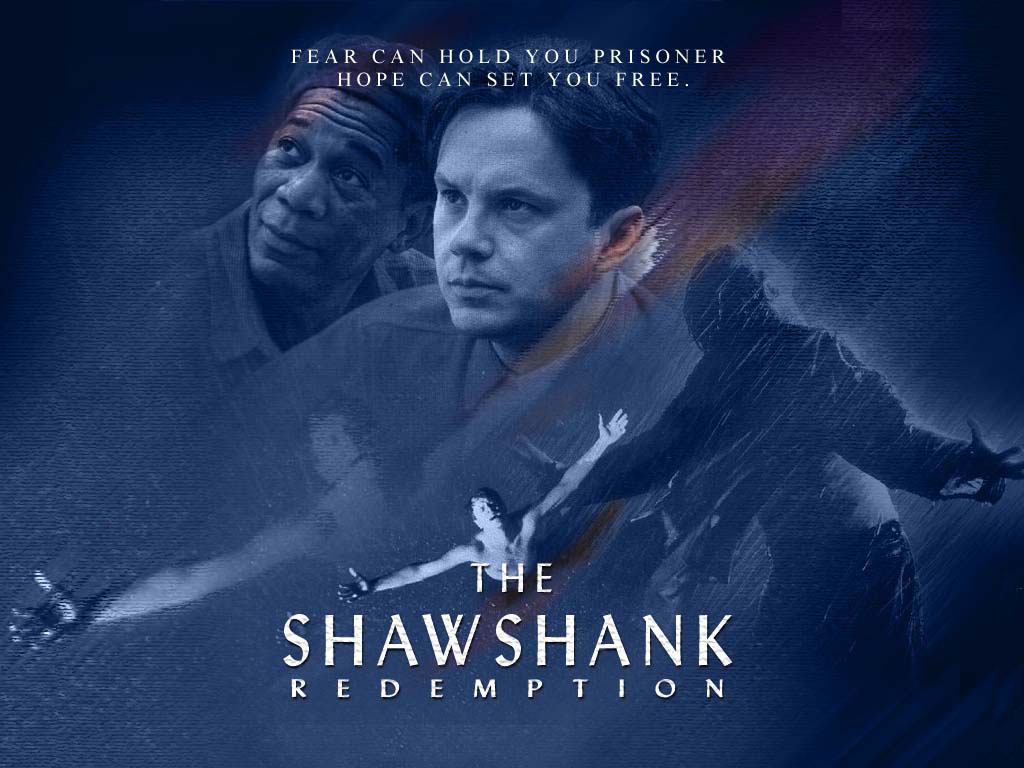
(Frank Darabont 1994)
Please click here for detailed information on this film.
Subscribe to:
Posts (Atom)